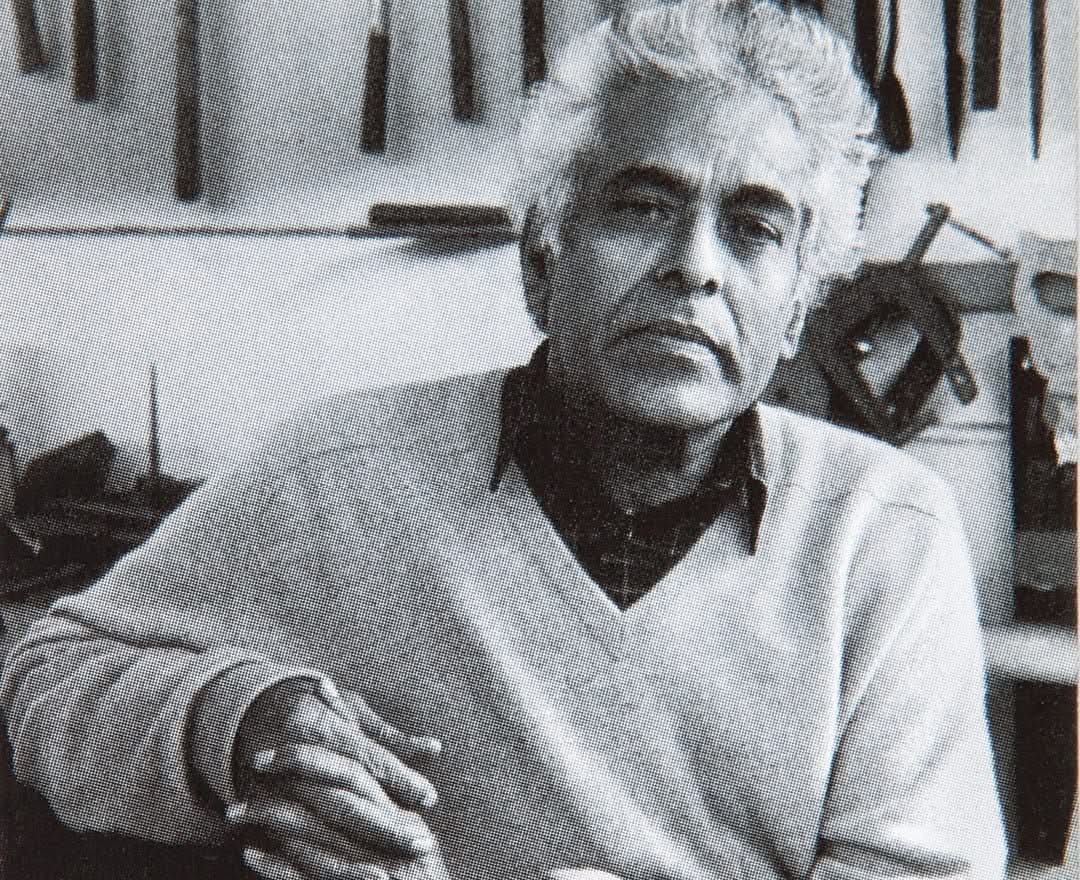
The Rare Artistic Genius of Telugu People: A Tribute to N. Krishna Reddy
The Rare Artistic Genius of Telugu People: A Tribute to N. Krishna Reddy
While traditional Indian painting has thousands of years of history, modern Indian painting has a history of about a century. Modern Andhra painting began with Damarla Rama-Rao in Rajahmahendravaram. Over the past century, legendary artists like Vaddadi Papaiah (Bapu), K. Rajayya, K. Lakshma Goud, Antyula Veerraju, C.S.N. Patnaik, B.V. Narasimha Rao, B.A. Reddy, Devaguptapu Sreenatha Vudayar, G. Narsimha Rao, Gauss Baig, Padma Shri N. Krishna Reddy, Padma Shri S.N. Ramarao, and Tota Narasimham brought immense recognition and glory to our art. Among them, N. Krishna Reddy and S.N. Ramarao gained notable fame not only as master painters but also as exceptional educators. Krishna Reddy excelled in printmaking, while Ramarao made a unique mark in modern painting styles. Although artists originating from Andhra Pradesh achieved global acclaim as top-tier international artists, many contemporary artists in our state are relatively unaware of them, largely because they settled in America. Consequently, printmaking—a major art medium—did not gain widespread popularity in India, especially in the Telugu states, despite receiving immense appreciation abroad.
Understanding Printmaking
In printmaking, an artist envisions a concept, carves it onto a zinc plate, immerses it in acid to etch the design, applies desired colors to the plate, and transfers it onto paper. Printmaking involves various types and techniques, allowing impressions to be made on surfaces like paper, fabric, wood, and metal. Long before the digital age, printmaking served as a vital medium for mass reproduction. In the 1970s, artists like P. Gauri Shankar, Devaraj Dakoji, K. Lakshma Goud, and D.L.N. Reddy made significant contributions to printmaking from Hyderabad. Later, Devaraj moved to New Delhi and served as the Head of the Gallery Division.
Life and Legacy of N. Krishna Reddy
N. Krishna Reddy was born on July 15, 1925, in Nandalur, Chittoor district. In 1941, he studied under the renowned artist Nandalal Bose at Shantiniketan and earned a Fine Arts diploma in 1946. From 1947 to 1950, he headed the art department at the Government College of Arts and Crafts, Madras.
Later, he pursued higher studies in fine arts at the University of London. In Paris, he studied sculpture under the celebrated sculptor Zadkine and worked alongside the legendary Marino Marini to create prints in Milan. From 1965, based in Paris, he served as the Associate Director of Atelier 17 and later worked as a Professor in the Art Department at the University of Wisconsin. Krishna Reddy’s pioneering techniques in printmaking and sculpture brought him global acclaim. His artworks captivated critics with their elegance, vibrant color dynamics, and deep beauty of expression. His creations featured unique compositions of paintings and sculptures, along with thought-provoking color choices.
Awards and Honors
* Recognizing his exceptional mastery in painting and sculpture, the Central Government honored him with the Padma Shri award in 1972.
* In 1980, Visva-Bharati University presented him with the Gagan Abani Award, which was handed over by the then Prime Minister Indira Gandhi.
* In the same year, Sri Venkateswara University, Tirupati, honored him with an honorary doctorate.
* In 1997, the All India Fine Arts and Crafts Society conferred upon him the 'Kalaratna' award.
* His artworks are preserved in all major art galleries worldwide.
This legendary artist passed away in New York on August 22, 2018.
(Article compiled by Sunkara Chalapathi Rao, Kalaratna Awardee, on the occasion of Krishna Reddy’s centenary celebrations on July 15).